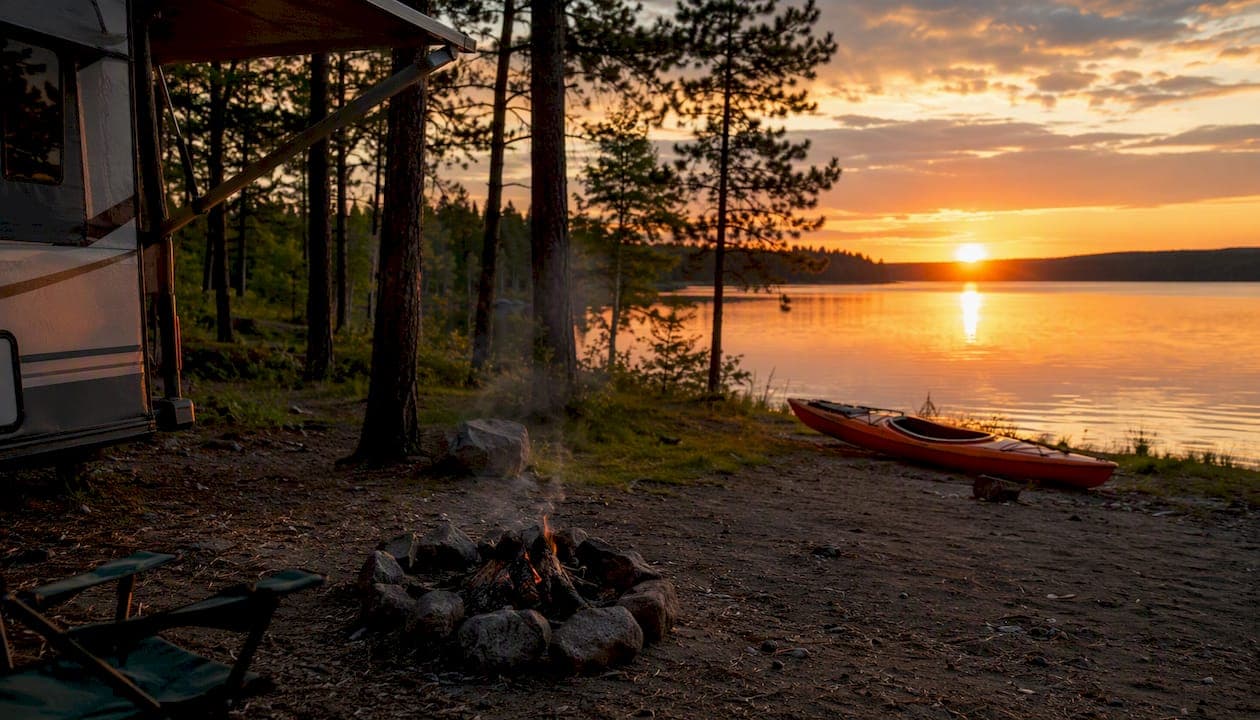
The fastest way to find a true lakefront RV campsite is to filter by shore access and hookup type on Campgazer, then confirm site-level specs on the official reservation page before you book. That two-step approach saves you from the most common disappointment in waterfront camping: arriving to find your "lakefront" site is actually a lake-view site, separated from the water by a row of trees and someone else's camper.
Before you book any waterfront RV site, run through three quick checks:
- Site length and hookups: Confirm the pad accommodates your rig (30 vs. 50 amp, full hookups vs. water/electric only, pull-through vs. back-in).
- True lakefront vs. lake view: Ask for the specific site number and verify its distance to the shoreline, not just the campground's proximity to the lake.
- Boat access: Check whether a boat ramp, beach launch, or dock is available on-site, and whether it's included or fee-based.
Pro Tip: When you search on Campgazer, use the "lakefront" and "boat ramp" filters together. That combination cuts through hundreds of listings and surfaces only the sites where you can actually step off your rig and reach the water.
Key Takeaways
The most reliable way to book a true lakefront RV site is to filter by shore access and hookup type on Campgazer, verify site-level specs on the official reservation page, and book as early as four to six months ahead for peak summer dates.
| Point | Details |
|---|---|
| Filter before you browse | Use Campgazer's lakefront and hookup filters to eliminate lake-view sites before comparing options. |
| Verify site-level specs | Confirm site number, shore distance, and rig-length clearance on recreation.gov or the state park page before booking. |
| Book early for summer | Peak lakefront sites at popular parks fill within hours of the booking window opening, often 4–6 months out. |
| Check seasonal conditions | Confirm park open dates, HAB advisories, and fire restrictions the week before arrival, not just at booking. |
| Campgazer for planning | Campgazer's community notes and trip planner help you confirm true shore access and build a shareable itinerary. |
Table of Contents
- Best lakefront RV campgrounds across U.S. regions
- How do you choose the right lakeside campsite for your RV?
- What amenities and activities can you expect at lakefront campgrounds?
- What seasonal access issues should you check before booking?
- How do you book a lakefront RV site, and what does it cost?
- Safety checklist for lakefront RV stays: water, weather, and camp
- Why the "lakefront" label deserves more skepticism than you'd expect
- Campgazer makes finding your next lakefront RV site straightforward
- Authoritative sources to check before you go
Best lakefront RV campgrounds across U.S. regions
The campgrounds below represent a cross-section of what's available from the Pacific Coast to the Carolinas. Each one has something specific going for RVers, whether that's full hookups right at the water's edge, a protected cove for paddling, or a boat ramp that handles everything from kayaks to pontoons.
West region
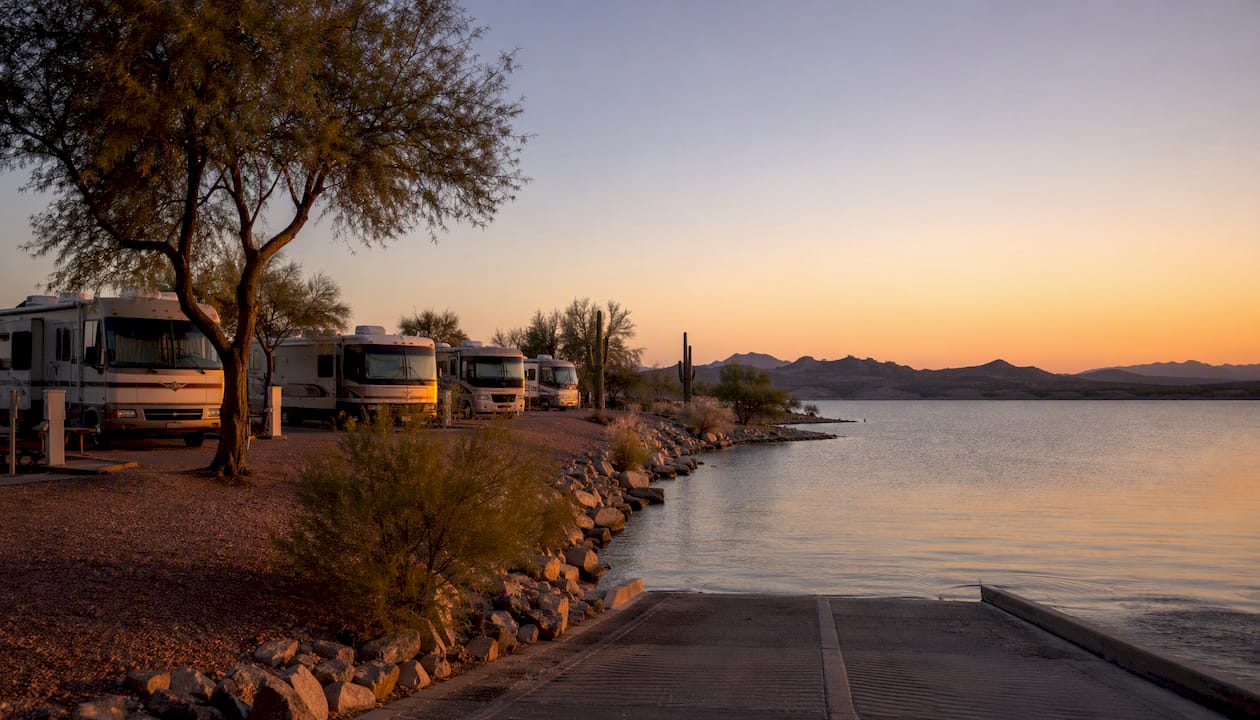
Lake Havasu State Park Campground, Arizona sits on the Colorado River's reservoir shoreline and is one of the most RV-accessible lakefront parks in the Southwest. Sites accommodate large rigs, and the park offers a paved boat ramp, beach swimming, and direct shorefront access. The desert setting means minimal shade, so a good awning matters here. Reserve through recreation.gov, which lists site-specific details including which sites sit closest to the water.
Mazama Village Campground at Crater Lake National Park, Oregon sits roughly two miles from the caldera rim rather than directly on the lake, but it's the primary RV base for exploring Crater Lake's shoreline trails and boat tours. Full hookups are available, sites handle rigs up to 50 feet, and the NPS manages reservations. Check nps.gov for seasonal opening dates, since the park typically opens in late May or June depending on snowpack.
Trinity Lake KOA Holiday, Northern California offers lakeside sites with full hookups and a marina, making it a strong pick for RVers who want both shore access and resort-level amenities. The KOA format means reliable 50-amp service, a dump station, and organized activities.
Mountain and Southwest region
Lake Pleasant Regional Park, Peoria, Arizona is a Maricopa County park on a large reservoir northwest of Phoenix. It has two marinas, a full-service boat ramp, and RV sites with electric hookups. The lake is popular for wakeboarding and bass fishing, and the park stays open year-round, which is a genuine advantage in a region where summer heat pushes many campers toward shoulder-season visits.
Inks Lake State Park, Texas is one of the Texas Hill Country's best-kept secrets for RV camping on a lake. The Texas Parks & Wildlife site shows site maps, hookup details, and boat ramp locations. Sites sit close to the water, and the constant-level lake (fed by Highland Lakes chain) means you won't arrive to find a mudflat where the shore used to be.
Midwest region
Rend Lake, Wayne Fitzgerrell State Recreation Area, Illinois offers full-hookup RV sites within walking distance of a sandy beach on one of Illinois's largest reservoirs. The park has a marina, boat rentals, and a dump station. It's a solid family-swimming and fishing destination with relatively easy reservations outside of July Fourth weekend.
Clear Lake State Park, California (listed here as a West/Midwest-style freshwater lake park) has detailed site specs and water-activity notes on Campgazer, including which sites offer direct shore access versus elevated lake views.
South region
Kerr Lake State Recreation Area, North Carolina spans the Virginia-North Carolina border on a 50,000-acre reservoir. It's a top pick for fishing and boating, with multiple campground units offering electric hookups, a boat ramp, and wooded shorefront sites. You can review the Campgazer profile for Kerr Lake for site-level specs before heading to the state reservation system to book.
Pickwick Landing State Park, Tennessee sits on the Tennessee River's Pickwick Lake and has full-hookup RV sites with direct water access, a marina, and a swimming beach. The park is open year-round and well-suited for anglers targeting crappie and bass.
East region
Promised Land State Park, Pennsylvania offers electric-hookup RV sites on two lakes in the Pocono Mountains, with a swimming beach, fishing, and canoe rentals. It's a quieter alternative to the more crowded Delaware Water Gap area.
KOA Marina Side Campground rounds out the list as a premium marina-adjacent option. The Campgazer campsite detail page shows rig-fit notes and hookup specs, useful for confirming whether your setup fits before you commit.
Quick comparison: lakefront RV campgrounds by region
| Campground | State/Region | Best For | RV Hookups | Lake Access | Key Amenities | Reservation Difficulty |
|---|---|---|---|---|---|---|
| Lake Havasu State Park | AZ / Southwest | Boating, swimming | Partial (W/E) | Beach, boat ramp | Dump, potable water, restrooms | Moderate (book 6 months out) |
| Mazama Village / Crater Lake | OR / West | Solitude, scenery | Full hookups | Boat tours, rim trails | Showers, dump, potable water | High (opens late May/June) |
| Trinity Lake KOA Holiday | CA / West | Family, boating | Full hookups | Marina, beach | 50-amp, dump, showers | Moderate |
| Lake Pleasant Regional Park | AZ / Southwest | Boating, fishing | Electric only | Two marinas, boat ramp | Dump, potable water, restrooms | Low to moderate |
| Inks Lake State Park | TX / South | Fishing, swimming | Full hookups | Shorefront, boat ramp | Showers, dump, potable water | High in summer |
| Kerr Lake SRA | NC / South | Fishing, boating | Electric only | Shorefront, boat ramp | Dump, potable water, restrooms | Moderate |
| Rend Lake / Wayne Fitzgerrell | IL / Midwest | Family swimming | Full hookups | Beach, marina | Dump, showers, boat rentals | Low to moderate |
| Pickwick Landing SP | TN / South | Fishing, boating | Full hookups | Marina, beach | Showers, dump, potable water | Moderate |
| Promised Land SP | PA / East | Quiet, paddling | Electric only | Beach, canoe launch | Dump, potable water, restrooms | Moderate |
| KOA Marina Side | Varies | Boating, amenities | Full hookups | Marina | 50-amp, showers, dump | Varies |
How do you choose the right lakeside campsite for your RV?
Picking a lakefront site that actually works for your rig takes more than scanning a campground map. Here's a numbered checklist of the specs to confirm before you commit.
- Rig length and pad clearance. Know your total length including tow vehicle or toad. Many lakefront sites are shorter than inland sites because they follow the shoreline's natural contour. A 45-foot fifth wheel needs a different site than a 22-foot travel trailer.
- Amperage. Confirm 30-amp vs. 50-amp availability. Running air conditioning in summer on a 30-amp hookup with a large rig is a real problem, especially in Arizona or Tennessee heat.
- Full hookups vs. water/electric only. If you need sewer, verify it's on-site. Many lakefront sites offer water and electric but no sewer, which means you'll need a dump station nearby.
- Pad surface. Gravel, asphalt, concrete, or dirt all affect leveling. Dirt pads near the water can turn soft after rain.
- Pull-through vs. back-in. Shorefront sites are often back-in only, with the water behind you. Know your backing skills or ask if a pull-through is available.
- Site proximity to the water. Ask for the site number and look it up on the reservation system's site map. Recreation.gov campground pages include site maps that show shore proximity clearly.
Beyond the specs, ask the host or reservation system these questions:
- What is the exact distance from the site pad to the waterline?
- Is the site on a slope or grade? (A sloped lakefront site makes leveling difficult.)
- Is there shade, or is the site fully exposed?
- Are pets allowed on the beach or in the water?
- Can you launch a kayak or paddleboard directly from the site, or only from the designated ramp?
Red flags to watch for:
- Listings that say "lake views" without specifying "lakefront" or "shorefront." These are often separated from the water by a road, a row of trees, or other campsites.
- "Private dock access" that turns out to be a shared dock with a waitlist or a fee structure not disclosed in the listing.
- Site length listed as "up to 40 feet" without specifying whether that includes slide-outs.
- No dump station listed and no sewer hookup. For stays longer than two nights, this matters.
What amenities and activities can you expect at lakefront campgrounds?
The range is wide. A state park on a reservoir might offer a basic boat ramp and vault toilets, while a private lakeside RV resort might include a full marina, a pool, and on-site kayak rentals. Here's a practical breakdown.
Common amenities: what's typical vs. what costs extra
| Amenity | Typical Availability | Notes for RVers |
|---|---|---|
| Dump station | Usually included | Confirm location; some are off-site |
| Potable water | Standard at most parks | Verify if water/electric or full hookup |
| Restrooms / flush toilets | Standard at developed sites | Vault toilets at primitive sites |
| Showers | Common at state parks, standard at KOA | May be coin-operated |
| Boat ramp | Common at lake parks | May require a day-use fee |
| Swimming beach | Common, but not universal | Check for seasonal closures |
| Boat slip / dock rental | Fee-based at marinas | Not available at most state parks |
| Cell coverage | Highly variable | Check coverage maps before booking |
| On-site marina | Premium parks and resorts | Fuel, pump-out, and rentals vary |
Water activities and what supports them
Boating is the primary draw at most lakefront campgrounds. A paved boat ramp with a courtesy dock makes launching straightforward; a gravel or dirt ramp is workable but trickier with a heavier boat. If you're trailering a pontoon or ski boat, confirm ramp width and depth before you arrive.
Paddle sports (kayaking, canoeing, stand-up paddleboarding) work well at protected coves and smaller lakes where motorboat wake isn't constant. Parks like Promised Land in Pennsylvania and Inks Lake in Texas have calm water that suits paddlers well.
Swimming beaches vary from sandy, lifeguarded stretches to unmarked shoreline. Check whether the beach is designated and whether it has a roped swim area, especially if you're traveling with children.
Fishing is available at virtually every lake campground in this list. Bass, crappie, catfish, and trout are common targets depending on region. A valid state fishing license is required everywhere; confirm the specific state's rules before you cast.
Pro Tip: Cell coverage at lakefront campgrounds is often weaker than at highway-adjacent parks. Before you go, check your carrier's coverage map for the specific lake area, and consider a cellular booster or a backup satellite communicator for remote sites.
What seasonal access issues should you check before booking?
Lakefront campgrounds have more seasonal variables than inland sites. Water levels, wildlife protection windows, and algae blooms can all affect your stay, sometimes dramatically.
- Park open dates. Many mountain lake campgrounds, including Mazama Village at Crater Lake, open in late May or June and close by October. Check NPS pages for federal park schedules and state park websites for state-managed sites.
- Wildlife and nesting season restrictions. Some beachside campgrounds restrict access during nesting seasons. County park advisories list specific nesting windows that can temporarily close beach areas, so check local environmental calendars before booking a beachside site.
Pro Tip: The fastest way to check current conditions is to search "[park name] current conditions" on the official park website, then call the ranger station directly if the page hasn't been updated recently. A two-minute phone call beats arriving to a closed beach.
For NPS lake resources, the park pages include visitor safety notices and site-specific rules that affect both on-lake activities and campground access.
How do you book a lakefront RV site, and what does it cost?
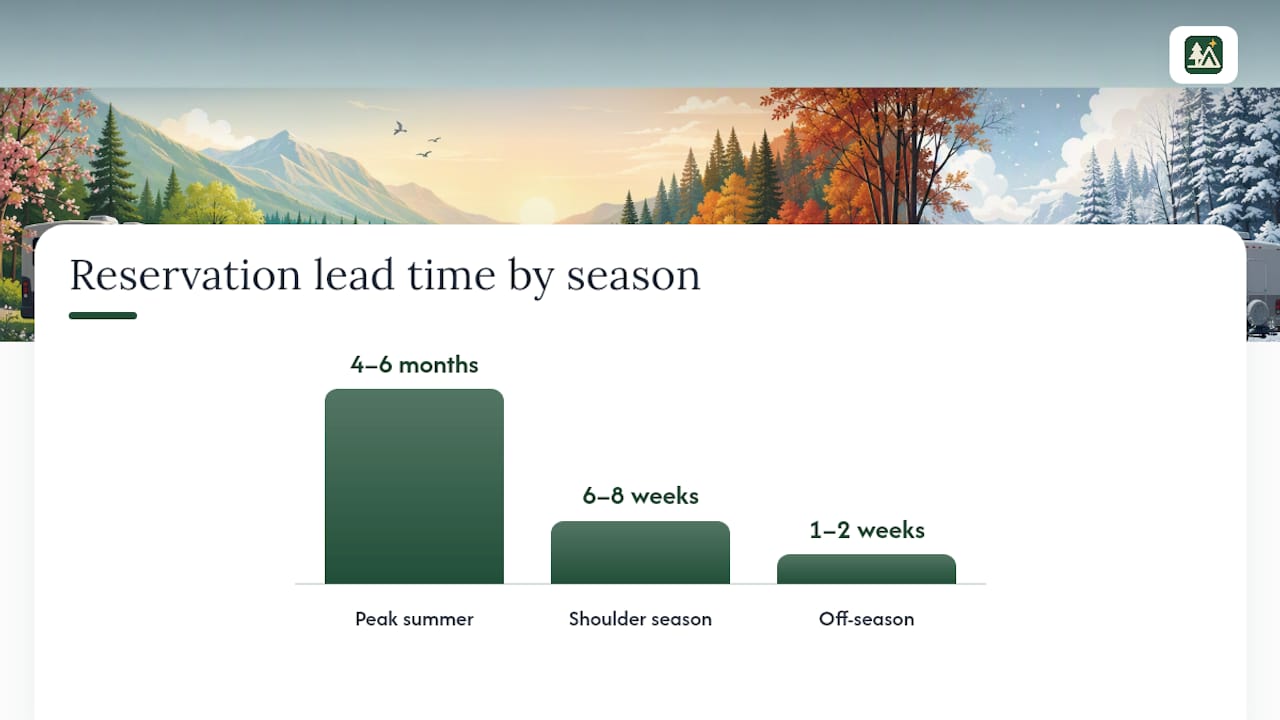
The booking workflow that works best for lakefront RV camping has three steps: filter on Campgazer to identify candidate sites and verify specs, then book directly through the authoritative reservation system (state park portal, recreation.gov, or the private park's own site).
Reservation timing by season
| Season | How Far Ahead to Book | Notes |
|---|---|---|
| Peak summer (June–August) | 4–6 months | Lakefront sites fill within hours of the booking window opening |
| Shoulder (May, September) | 6–8 weeks | Good availability, often better pricing |
| Off-season (October–April) | 1–2 weeks | Many lakefront parks close or limit sites |
Safety checklist for lakefront RV stays: water, weather, and camp
Lakefront camping adds a layer of safety considerations that inland sites don't have. Most are straightforward to manage with a little preparation.
Water safety is the most critical. Life jackets should be on every person in a boat, kayak, or paddleboard, regardless of swimming ability. Children under 13 are required by law to wear a Coast Guard-approved life jacket while on a vessel in most states. Keep a throwable flotation device accessible on any motorized boat.
Weather on open water moves faster than it looks from shore. A clear morning can turn into a thunderstorm by early afternoon on large reservoirs like Lake Havasu or Kerr Lake. Check the National Weather Service marine forecast for your lake before heading out, and get off the water at the first sign of lightning.
Campfire and fire restrictions at lakefront parks change with drought conditions. Always check the current fire restriction level on the park's official page before you build a fire, even if you've camped there before.
Securing watercraft overnight matters more than most campers expect. Waves from motorboat wake, wind, or sudden weather can move an unsecured kayak or canoe off the shore. Use a tie-down stake or a short cable lock to secure small watercraft to a tree or your rig.
Lake level rises can happen quickly after upstream dam releases or heavy rain. If your site is close to the waterline, check the park's flood advisory page and keep your rig's leveling jacks clear of the water's edge.
Why the "lakefront" label deserves more skepticism than you'd expect
There's a gap between what campground listings promise and what you actually find when you pull in. The word "lakefront" gets applied to sites that are a five-minute walk from the water, separated from the shore by a road, a row of RVs, or a fence. I've seen it on sites where the only lake view requires standing on your roof. The checklist in this article exists because that gap is real and common.
What experienced RVers learn quickly is that the site number matters more than the campground name. Two sites in the same park can be completely different experiences. Site 4 might be 20 feet from the waterline with a sandy launch spot for a kayak. Site 12 in the same campground might be 200 feet back with a partial water view through the trees. The reservation system's site map, combined with community photos on Campgazer, is the only reliable way to know which one you're getting before you arrive.
The other thing worth saying plainly: shoulder season at a lakefront park is often better than peak summer. The water is the same. The sunsets are the same. The fishing is often better. And you won't spend Friday night listening to a generator running next door.
Campgazer makes finding your next lakefront RV site straightforward
Sorting through hundreds of campground listings to find one where your rig fits, the hookups are right, and the shore is actually accessible takes time you'd rather spend at the water. Campgazer cuts that process down by letting you filter across 10,000+ campgrounds by hookup type, site length, shore access, and boat ramp availability, all in one place.
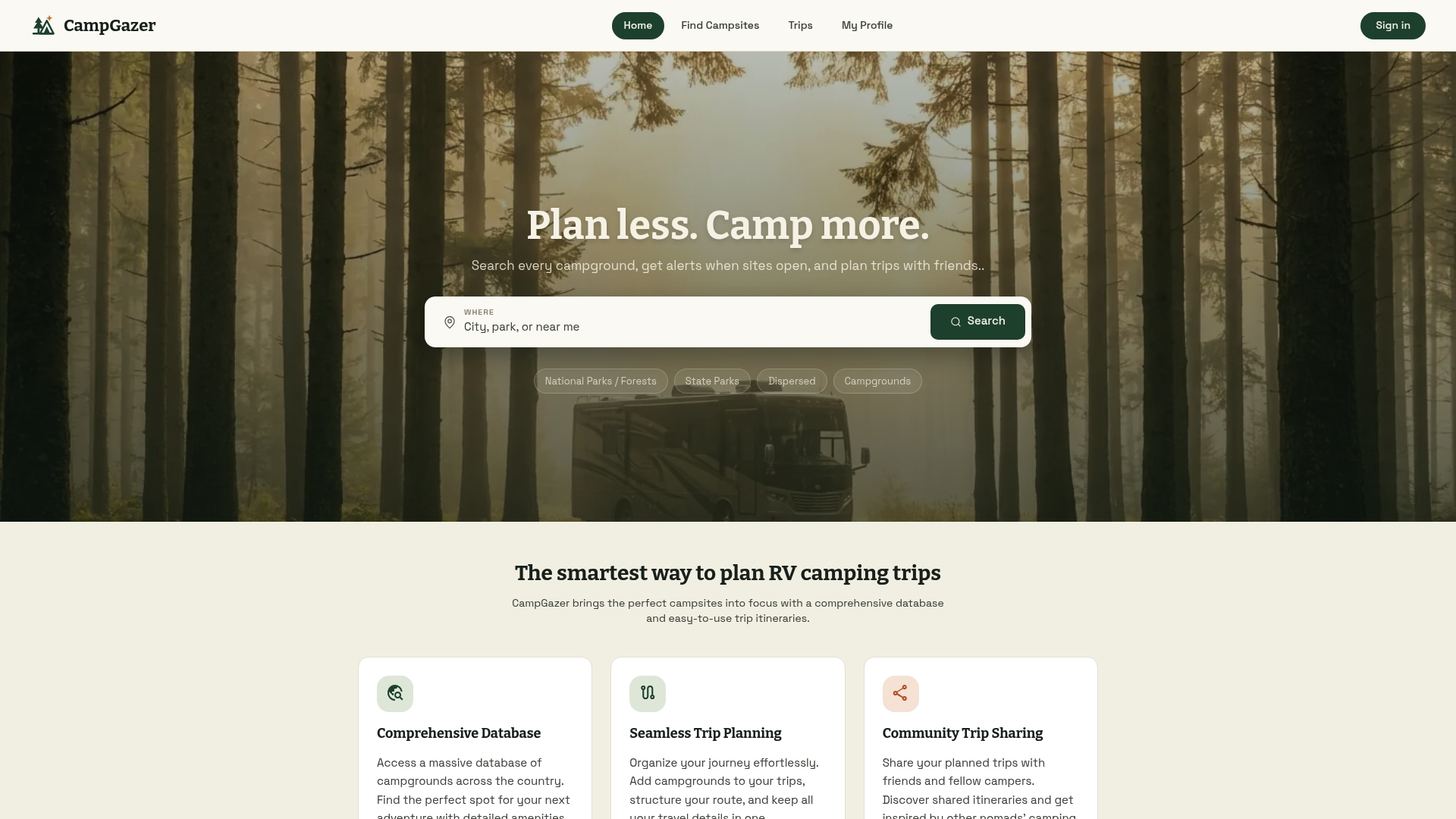
For lakefront RV camping specifically, Campgazer's site-level detail pages show you the specs that matter: pad length, amperage, distance to shore, and user-submitted photos that confirm what the listing says. The trip planner lets you build a full itinerary around your rig's specs and share it with travel partners before you leave home. Live availability alerts mean you're notified when a hard-to-get shorefront site opens up.
- Trip planner — with shareable itineraries built around your rig
Browse campsite specs and availability on Campgazer and start building your lakefront itinerary today.
Authoritative sources to check before you go
These are the official sites worth bookmarking for current conditions, reservations, and safety information:
- recreation.gov
- recreation.gov
- recreation.gov
- recreation.gov
- nps.gov
- nps.gov
- tpwd.texas.gov
- Sarasota County Parks
- CampGazer | Plan RV Trips & Check Campsites
Before finalizing any booking, cross-check what Campgazer shows against the official reservation page. Campgazer's community data is current and detailed, but the authoritative source for site availability, pricing, and cancellation policy is always the park's own reservation system.