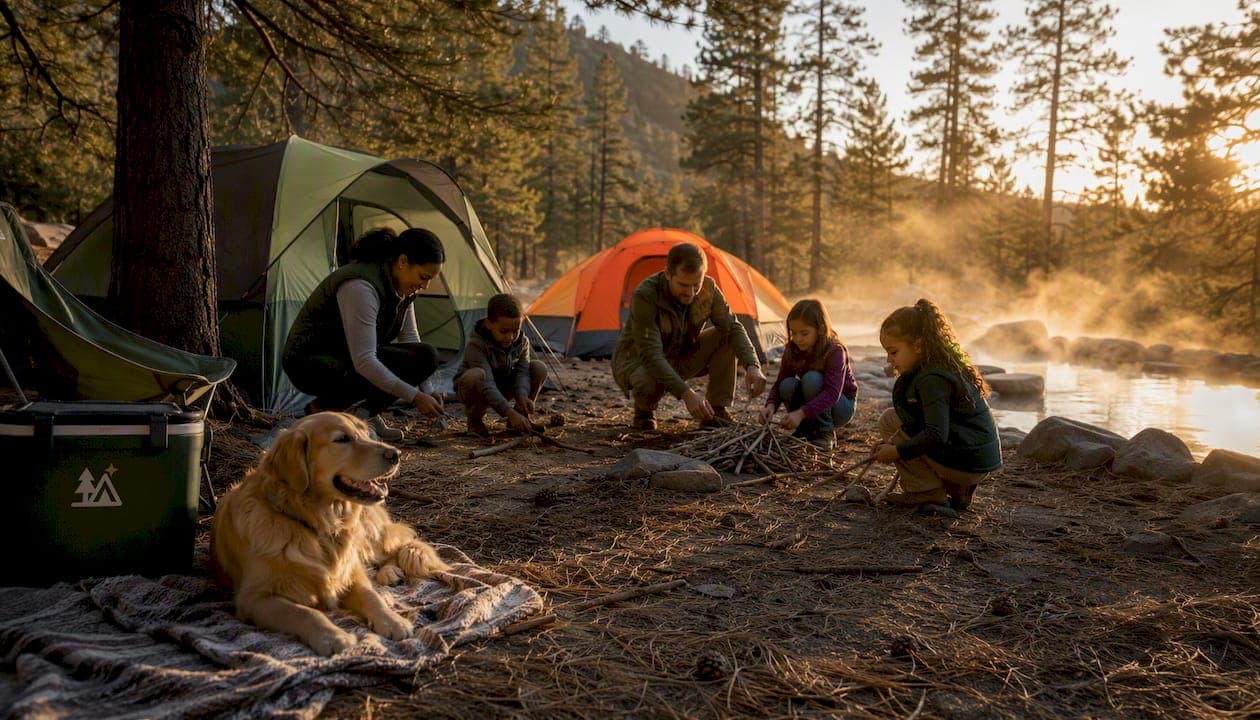
Yes, hot springs campgrounds exist across the United States, and they range from resort-style RV parks with private soaking tubs to primitive Forest Service sites beside naturally flowing geothermal pools. Whether you're pulling a 40-foot fifth wheel or pitching a tent under the pines, there's a setup that fits. The fastest way to find one that matches your rig and soaking preferences is to run a filtered search on Campgazer, where you can sort by hookup type, site length, and hot springs access all at once.
What you'll typically find at these campgrounds:
- On-site soaking pools or private tubs included with your stay or available for a small daily fee
- RV sites ranging from primitive no-hookup pads to full 50A hookups with pull-through lengths up to 100 feet
- Tent sites and cabins (some resorts offer yurts with private soaking options)
- Soaking access policies that vary from 24-hour guest access to restricted daily windows
- Nearby recreation including hiking trails, river access, and fishing
Table of Contents
- What are hot springs campgrounds, exactly?
- What to check on every listing before you book
- How do you pick the right hot springs campground for your group?
- Timing, packing, and staying safe at hot springs
- How Campgazer helps you find the right hot springs campsite
- Key Takeaways
- What I've learned from booking hot springs campsites
- Plan your hot springs trip with Campgazer
- Useful sources to verify before you book
What are hot springs campgrounds, exactly?
Not every campground marketed as a "hot springs" property delivers the same experience, so it pays to know the three main configurations before you book.
Resort-style campgrounds sit on or adjacent to developed soaking facilities. Think Grande Hot Springs RV Resort, which offers 100 grassy pull-through RV sites alongside pool and spa access, including private yurt soaking options for families who want more privacy. These properties usually include full hookups, restrooms, laundry, and on-site staff.
Campground-adjacent hot springs place you within walking or short driving distance of a public or semi-public soaking area. The campground itself may be a standard Forest Service or county site, but the springs are the draw. Gulpha Gorge Campground inside Hot Springs National Park is a well-known example, where the thermal springs are a short walk from your site.
Primitive camps with natural soak spots are the most rugged option. Sites like Mono Hot Springs Campground in Sierra National Forest sit at roughly 6,700 feet elevation, open seasonally from June through September, and charge around $37 per night for a single site. Large RVs are not recommended on Kaiser Pass Road leading to the campground, so rig suitability is a real concern here.
Natural vs. artificially heated: Geothermal-fed springs continuously replenish with minerals like sulfur, magnesium, and lithium, which is why operators label them "naturally flowing" as a selling point. Artificially heated tubs can be pleasant, but they don't carry the same mineral content. If the therapeutic or authentic experience matters to you, look for "geothermal-fed" or "naturally flowing" in the listing description.
Access is commonly structured one of three ways: included with your overnight stay, sold as a day pass, or limited to posted public hours. Orvis Hot Springs provides two days of soaking per night stayed at some properties. Norris Hot Springs lists unlimited soaking for $3 per guest per day during public hours. Always verify which model applies before you arrive.
What to check on every listing before you book
Skipping the fine print on a hot springs campsite is how you end up parked in a site your rig barely fits, with pool access that closed at 10 PM. Here's what to scan for on every listing.
Site and hookup specs
| Feature | What to look for |
|---|---|
| Electrical service | 30A or 50A availability; confirm which your rig needs |
| Pull-through length | Verify max RV length; Crystal Crane Hot Springs offers 100-foot pull-throughs |
| Full hookups | Water, electric, sewer vs. partial (water/electric only) |
| Dump station | On-site availability if full sewer hookup isn't offered |
| Tent sites | Separate from RV loop or shared area |
Soaking access checklist
- Hours posted? Some properties restrict soaking to daytime windows; others like Crystal Crane Hot Springs offer all-day, all-night access from check-in to check-out.
- Included or paid separately? Norris Hot Springs charges $3 per guest per day; other resorts bundle it into the site fee.
- Age restrictions? Some pools prohibit children under a certain age or require adult supervision.
- Private tub availability? Worth asking if you're traveling with young kids or prefer a quieter soak.
- Reservation required for the pool? A few properties require pool-time reservations separate from your campsite booking.
Booking and on-site services
Confirm minimum-stay requirements before you commit, especially on holiday weekends when two or three-night minimums are common. Tecopa Hot Springs and Campground offers about 30 partial-hookup RV sites alongside 200+ no-hookup sites, with day passes and monthly pass options for longer stays, and recommends reservations during peak season. Check cancellation windows carefully; many hot springs properties hold deposits.
On-site services worth confirming: restrooms and showers (vault vs. flush), laundry facilities, Wi-Fi availability, pet policies (some soaking areas are pet-free even when the campground allows dogs), and any food or dining options on property.
Accessibility: Ask specifically whether soaking pools have ramp or lift access if anyone in your group has mobility needs. Not all properties list this detail online.
How do you pick the right hot springs campground for your group?
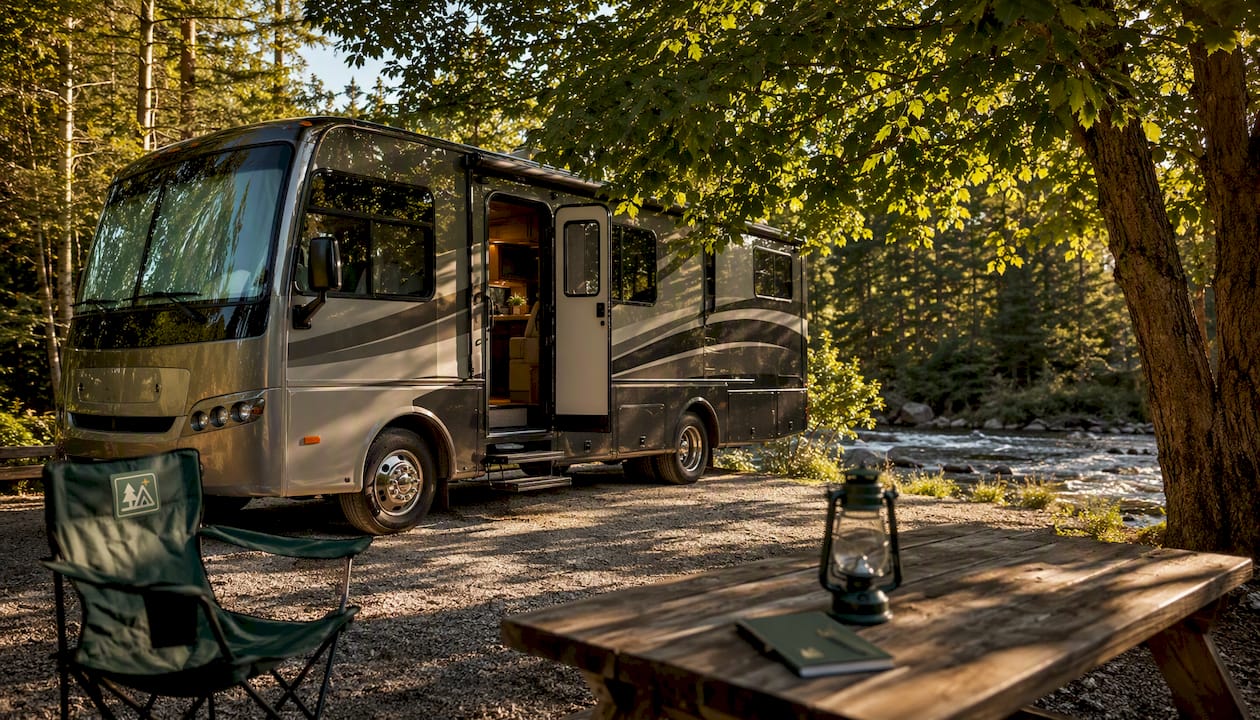
Start with your rig, not the scenery. A beautiful mountain soak means nothing if your Class A can't make it up the access road.
Step 1: Confirm road and site suitability. Check the access-road notes and recommended max RV length. Kaiser Pass Road to Mono Hot Springs is a clear example of a route that rules out large rigs entirely. If the listing doesn't specify, call the campground directly.
Step 2: Match soaking access to your priorities. If stargazing soaks or late-night quiet matter to you, prioritize properties with all-night or extended access. If you're traveling with kids, look for private tubs or family-friendly pool hours.
Step 3: Decide on your service tradeoff. Full hookups, laundry, and on-site dining suit families on a longer trip. A primitive site with a natural geothermal pool suits those who want solitude and don't mind hauling water.
Step 4: Ask these questions before booking:
- Is soaking included in the site fee, or is there an additional charge per guest?
- Are there age limits for the pools?
- What are exact check-in and check-out times, and does pool access extend through checkout?
- What is the cancellation policy and minimum-stay requirement?
Red flags to watch for: vague soaking-access language ("pools available"), no photos of the actual site or pool area, no posted rig-size specs, and missing cancellation terms. These gaps usually mean the listing is incomplete, and surprises await.
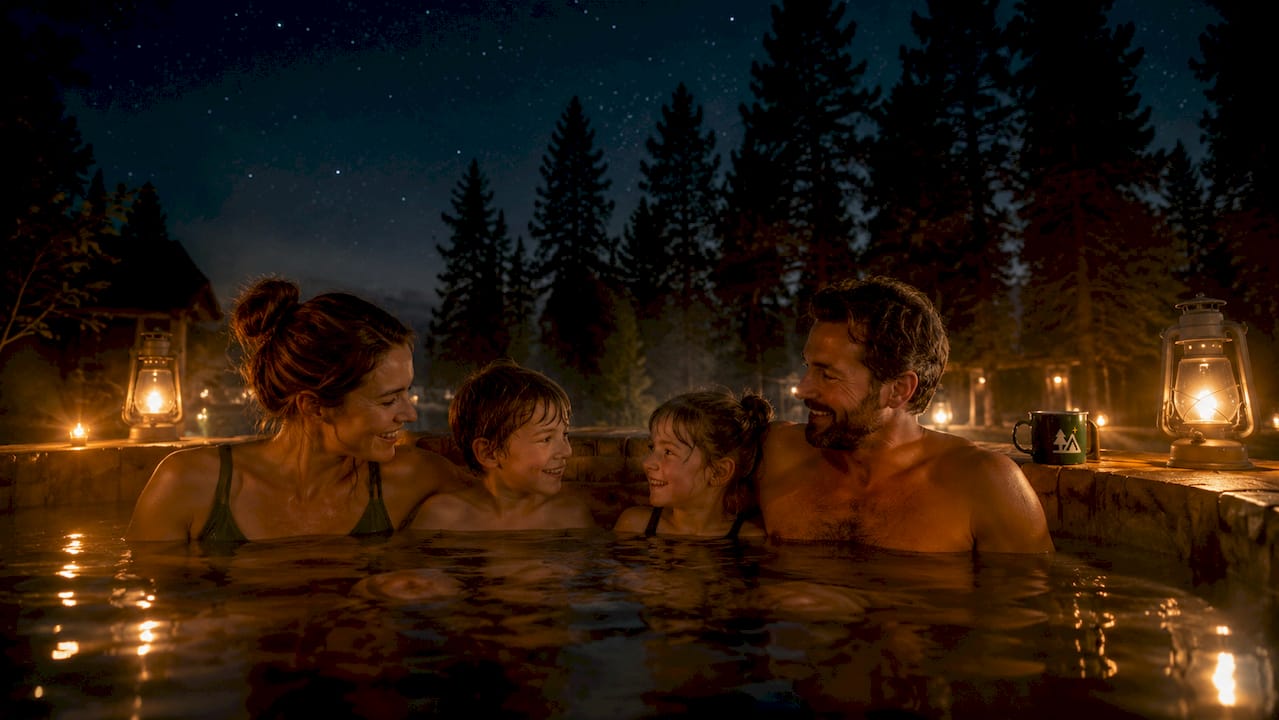
Pro Tip: Book a site with all-night pool access if you're traveling with family. Arriving at the pool after 9 PM means you'll likely have it to yourselves, which is worth more than any amenity upgrade.
Timing, packing, and staying safe at hot springs
Best seasons and timing
Spring and fall are the sweet spots for most hot springs campgrounds. Summer brings crowds and, at higher elevations, afternoon thunderstorms. Winter access can be spectacular (soaking in snow is a genuine pleasure), but many mountain properties close from October through May. Mono Hot Springs, for example, runs June through September due to snow closure. Check road-opening dates before planning a spring trip.
Arrive mid-week when possible. Weekend soaking pools at popular resorts can feel more like a water park than a wilderness experience.
Packing checklist for hot springs camping
- Water shoes or sandals for walking on hot pool surrounds
- Quick-dry towels (two per person; one for the pool, one for camp)
- Layers for post-soak — body temperature drops fast after a hot soak, especially at elevation
- Reusable water bottle to stay hydrated; hot soaking is dehydrating
- Small first-aid kit including blister care for rocky approaches
- Offline maps and downloaded reservation confirmations — many hot springs campgrounds have limited cell coverage, and remote valleys can drop signal entirely
Safety and etiquette
Watch water temperatures before stepping in, particularly at natural springs where temps can exceed safe soaking levels. Avoid prolonged soaking after alcohol consumption. Supervise children at all times near open pools. Pack out everything you bring in, and follow posted rules on soap, shampoo, and sunscreen near natural pools — many prohibit them to protect water quality.
Pro Tip: Bring a small waterproof thermometer if you're visiting a natural spring with no posted temperature signs. Water above 104°F can be dangerous for young children and elderly guests.
How Campgazer helps you find the right hot springs campsite
Searching for a rig-friendly hot springs campground without a filter tool means scrolling through dozens of listings manually, guessing at site lengths, and calling campgrounds to ask about soaking hours. Campgazer cuts that process down significantly.
The platform's searchable database covers 10,000+ campgrounds nationwide. You can filter by amenity type (including hot springs access), hookup type (30A/50A, full hookups), site length for your specific rig, and pull-through availability. Live availability alerts let you know when a site opens up at a property you've saved.
Here's a practical workflow:
- Search by region where you want to soak (Pacific Northwest, Rocky Mountains, California Sierra, Southwest desert).
- Apply rig filters for your vehicle length and hookup needs.
- Add the hot springs or soaking amenity filter to narrow results to properties with on-site access.
- Compare candidate sites for soaking-access type (included vs. paid, hours, private tubs), site photos, and booking rules.
- Save your itinerary and set availability alerts for your target dates.
The Glenwood Springs West listing on Campgazer shows how detailed site specs and photos help you evaluate a hot-springs-adjacent property before committing. Community-contributed photos and edits add a layer of real-world verification that official campground pages sometimes lack.
Before you finalize any booking: always click through to the campground's official page to confirm current soaking hours, fees, and any seasonal changes. Policies update more often than listings do, and a five-minute check saves a frustrating arrival.
Key Takeaways
The best hot springs campground for your trip comes down to three things: your rig fits the road and site, soaking access matches your schedule, and the booking terms are clear before you pay.
| Point | Details |
|---|---|
| Rig suitability first | Check access-road notes and max RV length before anything else; some roads exclude large rigs entirely. |
| Verify soaking access | Confirm whether soaking is included, paid separately, or restricted to posted hours before booking. |
| Pack for post-soak chills | Quick-dry towels, warm layers, and water shoes are the three items most campers wish they'd brought. |
| Go offline-ready | Download maps and reservation confirmations; many hot springs campgrounds have limited or no cell service. |
| Use Campgazer to filter | Search Campgazer's 10,000+ campground database by rig specs and hot springs amenity to shortlist sites fast. |
What I've learned from booking hot springs campsites
The single most underrated detail in hot springs camping is soaking-access timing, not the springs themselves. Most campers focus on finding a property with a pool and stop there. What actually shapes the experience is when you can soak and how crowded it gets.
The campgrounds that offer all-night or extended access consistently deliver a better experience for families. Getting into the water at 10 PM, when the day-trippers have gone home, is a completely different trip than fighting for pool space at 2 PM on a Saturday. If you're traveling with kids, a private tub option is worth every extra dollar. It removes the age-restriction question entirely and gives you a predictable, unhurried soak.
The other thing most guides skip: always call the campground directly after booking online. Policies around soaking hours, pet access near pools, and minimum-stay rules change seasonally, and the listing often lags behind. A two-minute phone call has saved more than a few trips from a frustrating surprise at check-in.
Plan your hot springs trip with Campgazer
Finding a rig-friendly hot springs campground with the right soaking access used to mean hours of cross-referencing campground websites, calling ahead for site specs, and hoping the photos matched reality. Campgazer gives you a faster route.
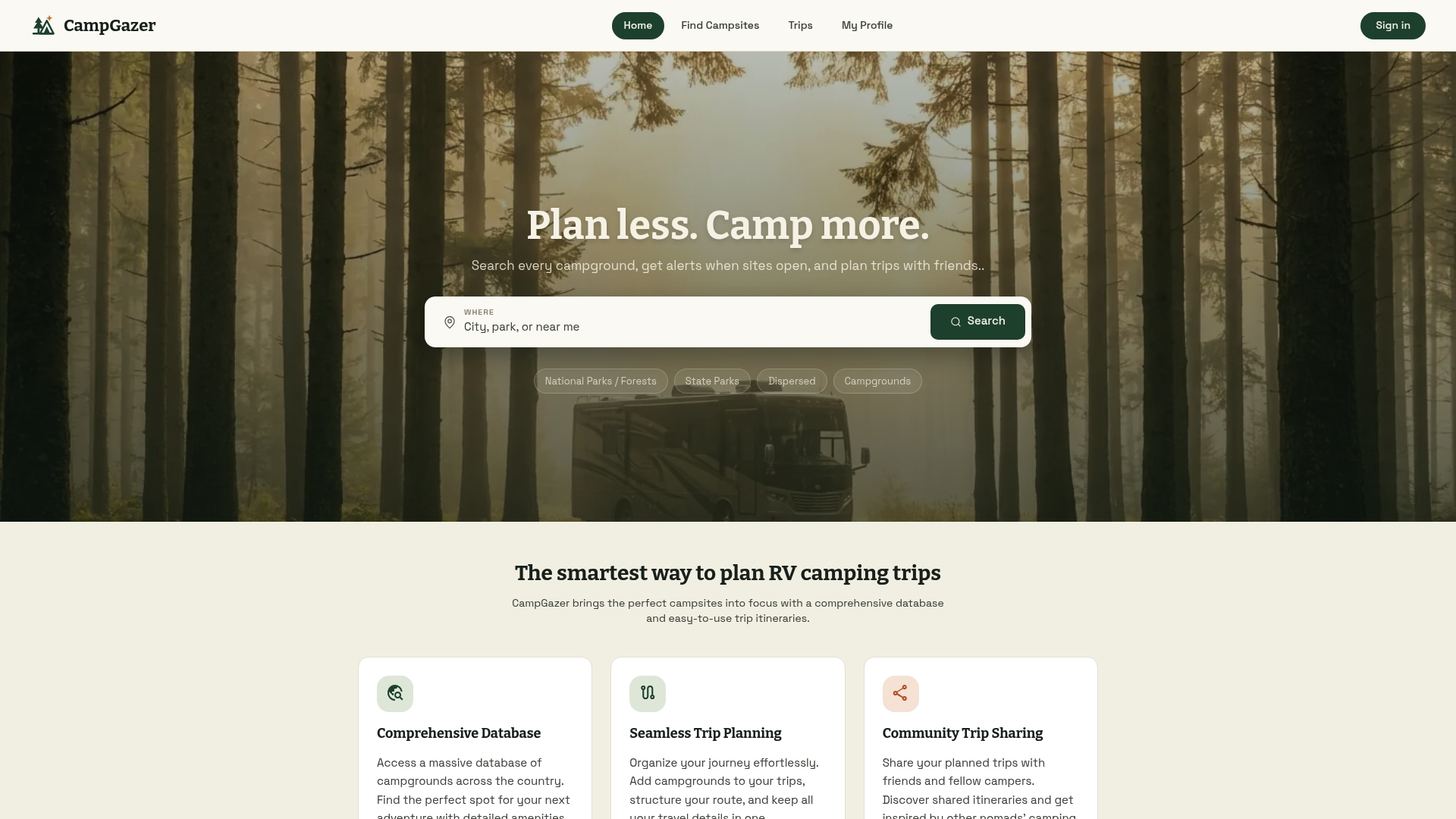
Filter 10,000+ campgrounds by hookup type, pull-through length, and hot springs amenity access in one search. Save candidate sites to a custom itinerary, set live availability alerts for your target dates, and link directly to official campground pages to verify soaking hours and fees before you commit. Community photos and campsite specs, like those on the Campgazer trip planner, give you a real-world view of what you're booking. Start your search at campgazer.com and have your shortlist ready before the weekend.
Useful sources to verify before you book
Always confirm soaking hours, fees, rig restrictions, and seasonal access directly with the campground or managing agency. Policies change, and listings don't always keep pace.
| Source | What to verify |
|---|---|
| Hot Springs National Park (NPS) | Thermal spring access, park hours, and visitor rules |
| Gulpha Gorge Campground (Recreation.gov) | Site availability, hookup types, reservation and cancellation policy |
| Mono Hot Springs (US Forest Service) | Seasonal opening dates, elevation, access-road notes, overnight fees |
| Norris Hot Springs | Soaking fees, posted hours, connectivity advisories |
| Crystal Crane Hot Springs | RV site specs, pull-through lengths, all-night access policy |
| Tecopa Hot Springs and Campground | Pass structures, hookup availability, peak-season reservation advice |
Quick verification checklist before any booking:
- Soaking hours confirmed (not just "available")
- Rig length and road-access notes reviewed
- Cancellation policy and minimum-stay requirement noted
- Age restrictions or reservation requirements for the pool clarified
- Seasonal opening and closing dates checked against your travel window