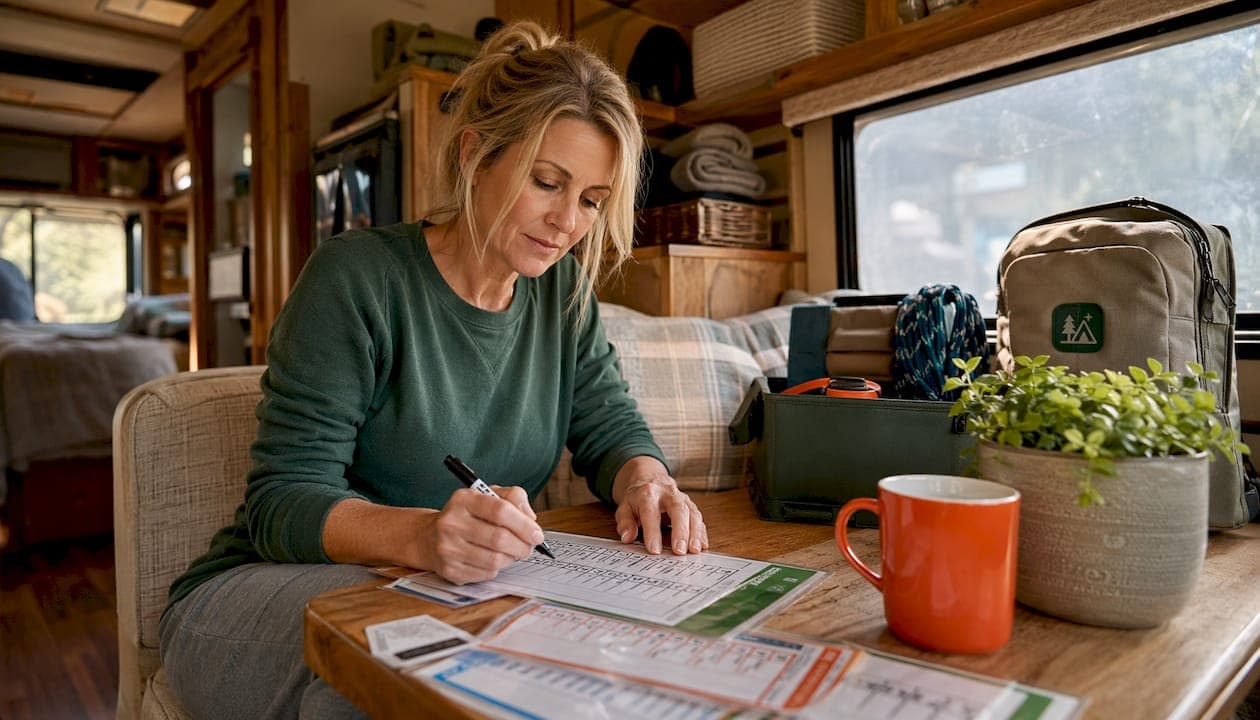
Start with a single printable master checklist covering hookups, safety, documents, kitchen basics, and bedding — pack those categories first, in that order, and you'll leave the driveway with everything that actually matters.
Before you dive into the category-by-category sections below, here are the items to load first:
- Registration, insurance, and roadside assistance card
- Fresh water hose (potable-rated) and pressure regulator
- Sewer hose kit and gloves
- Shore power adapters and surge protector
- Wheel chocks and leveling blocks
- Fire extinguisher and CO/propane detector
- First aid kit
- Medications and prescriptions
Print this master checklist, laminate it, and keep a dry-erase marker clipped to it. That single habit eliminates the last-minute scramble on every future trip.
Table of Contents
- Your printable RV packing checklist: formats and how to get them
- How to use this RV packing list: staging and packing order
- Every-trip essentials you can memorize
- Kitchen and food packing: essentials vs. nice-to-have
- Bedroom and bathroom: linens, toiletries, and space-saving hacks
- Clothing and laundry: pack by activity and weather
- RV maintenance and safety checklist (on-site and en route)
- Tools and repair spares to bring on the road
- Campsite setup and outdoor gear checklist
- Electronics, documentation, and navigation
- Packing for kids and pets
- Space-saving packing tips and common mistakes
- Adjust the list for campground amenities
- Pre-departure vehicle and safety checks
- Key takeaways
- The packing list gets shorter with experience
- Campgazer helps you pack smarter before you leave
- Useful sources and further reading
Your printable RV packing checklist: formats and how to get them
The most useful checklists are the ones you can reuse. Laminated checklists with dry-erase markers keep lists reusable and remove the stress of hunting for a pen at departure time. Here's what to print:
- Master checklist (one page): All categories on a single sheet. Print, laminate, and check off with a dry-erase marker before every trip.
- Kitchen checklist: Cookware, pantry staples, and appliances. Useful for rental rigs where you're unsure what's stocked.
- Hookup and setup checklist: Water hose, pressure regulator, sewer kit, surge protector, leveling blocks. Keep this one in the hookup bin itself.
- Family/kids checklist: Entertainment, snacks, ID bracelets, portable potty, and child-specific meds.
- Pets checklist: Food, bowls, leash, vet records, waste bags, and a familiar blanket.
- Blank template: One editable version to customize for your rig, trip length, or seasonal gear.
Rental vs. owner note: Rental rigs typically include basic cookware, linens, and hookup hoses. Before departure, call the rental company and confirm exactly what's onboard. Cross those items off your checklist so you don't duplicate weight.
How to use this RV packing list: staging and packing order
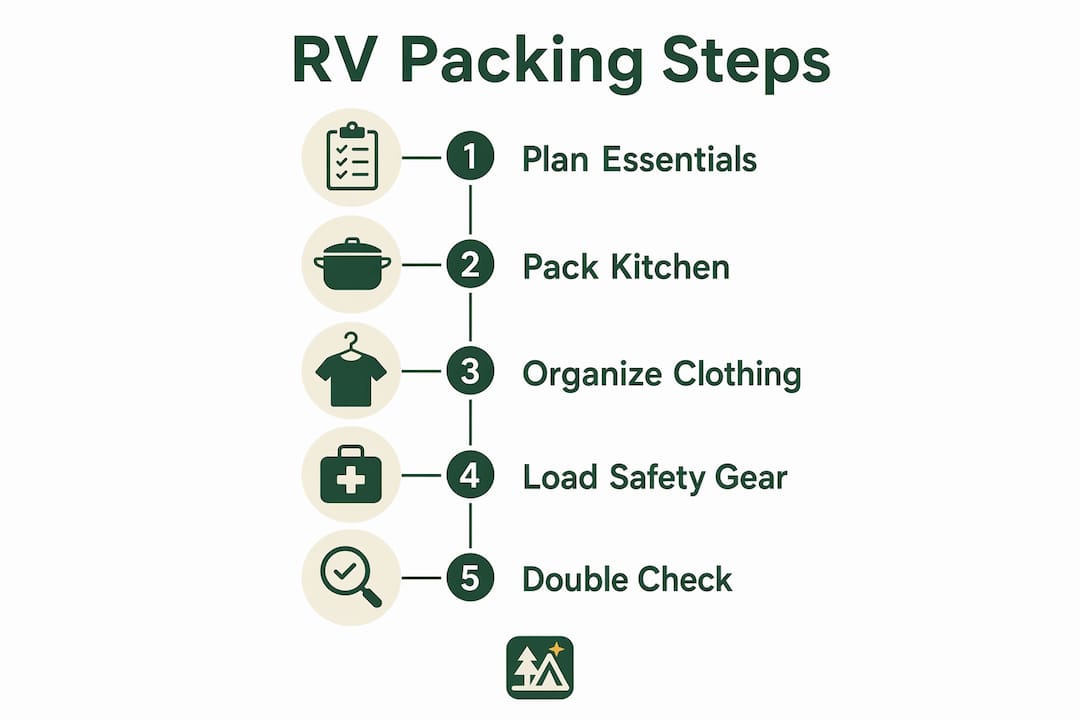
Packing an RV efficiently comes down to sequence. Load the right things first, and you won't find yourself digging through bedding to reach the sewer hose at the campground.
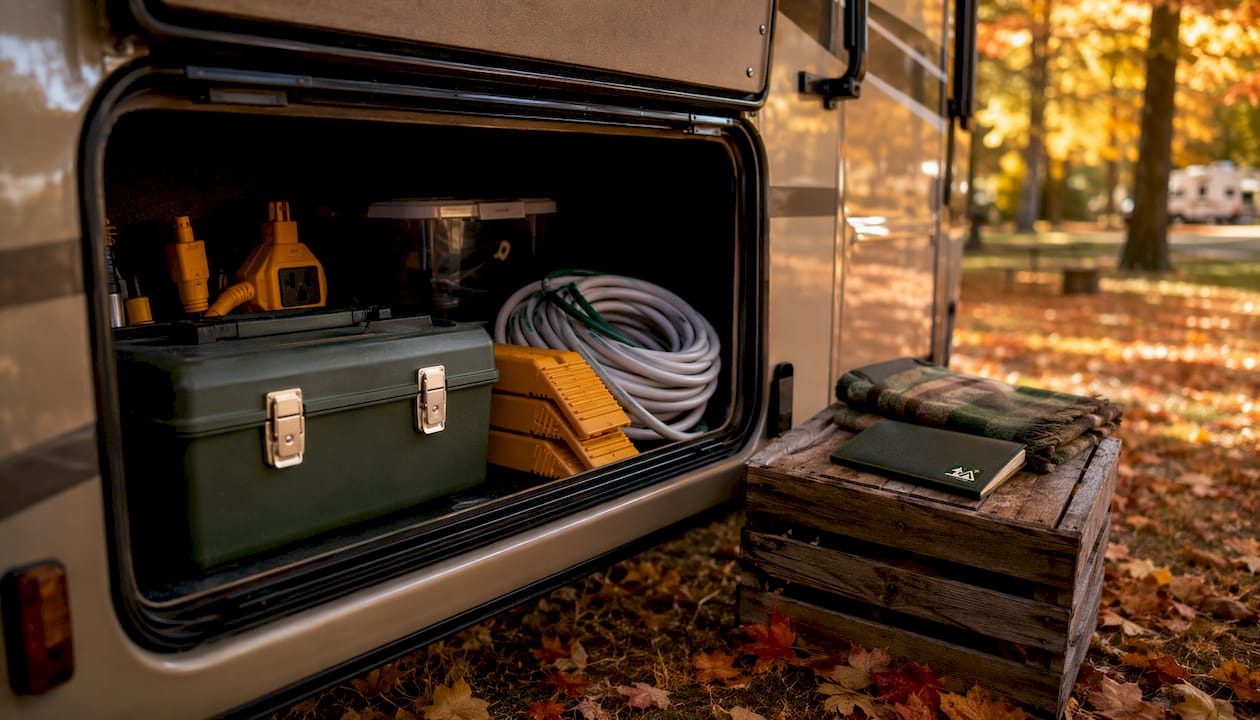
- Hookup gear first. Place the water hose, pressure regulator, sewer kit, surge protector, and adapters in one labeled bin near the door or in an exterior bay. These are the first things you need on arrival and the last things you stow before leaving.
- Safety and documents second. Driver's license, registration, insurance, roadside assistance card, and campground confirmations go into a dedicated folder in the cab. The fire extinguisher and CO detector get checked and placed before anything else goes inside.
- Kitchen and pantry third. Load dry goods, spices, and cookware before soft goods. Heavy items low and centered.
- Bedding and bath fourth. Vacuum-bag linens to compress them. Toiletries in a hanging organizer or shower caddy.
- Tools and spares fifth. One labeled repair bin in an accessible exterior compartment.
- Clothing and extras last. Packing cubes keep clothes compressed and sorted by person.
Rental callout: First-timers commonly forget power adapters, a water pressure regulator, and wheel chocks. Rental companies often omit these. Confirm the inventory list before pickup and bring your own if needed.
Pro Tip: Pack a small "departure essentials" bag that lives in the cab: documents, phone chargers, medications, snacks, and a water bottle. You'll reach for these within the first hour, and they shouldn't be buried in a storage bay.
Every-trip essentials you can memorize
Regardless of trip length or destination, these items belong on every RV. Think of it as your non-negotiable short list:
- Driver's license and vehicle registration — required for legal operation
- RV insurance and roadside assistance info — non-negotiable on any highway
- Fresh water hose (potable-rated) — a garden hose is not a substitute
- Water pressure regulator — protects your plumbing from campground pressure spikes
- Sewer hose and gloves — every campsite with a hookup requires them
- Surge protector — shields your electrical system from power fluctuations
- Wheel chocks — prevent rolling on uneven ground
- Fire extinguisher (checked and charged) — required by most campgrounds
- CO and propane detector — propane leaks are odorless at low concentrations
- First aid kit — stocked and checked before each trip
- Medications and prescriptions — include a few extra days' supply
- Basic tool kit — screwdrivers, pliers, duct tape, zip ties
A quick memory phrase: "Docs, Water, Power, Safety, Tools" covers the five pillars. If each category has at least one item loaded, you're road-ready.
Kitchen and food packing: essentials vs. nice-to-have
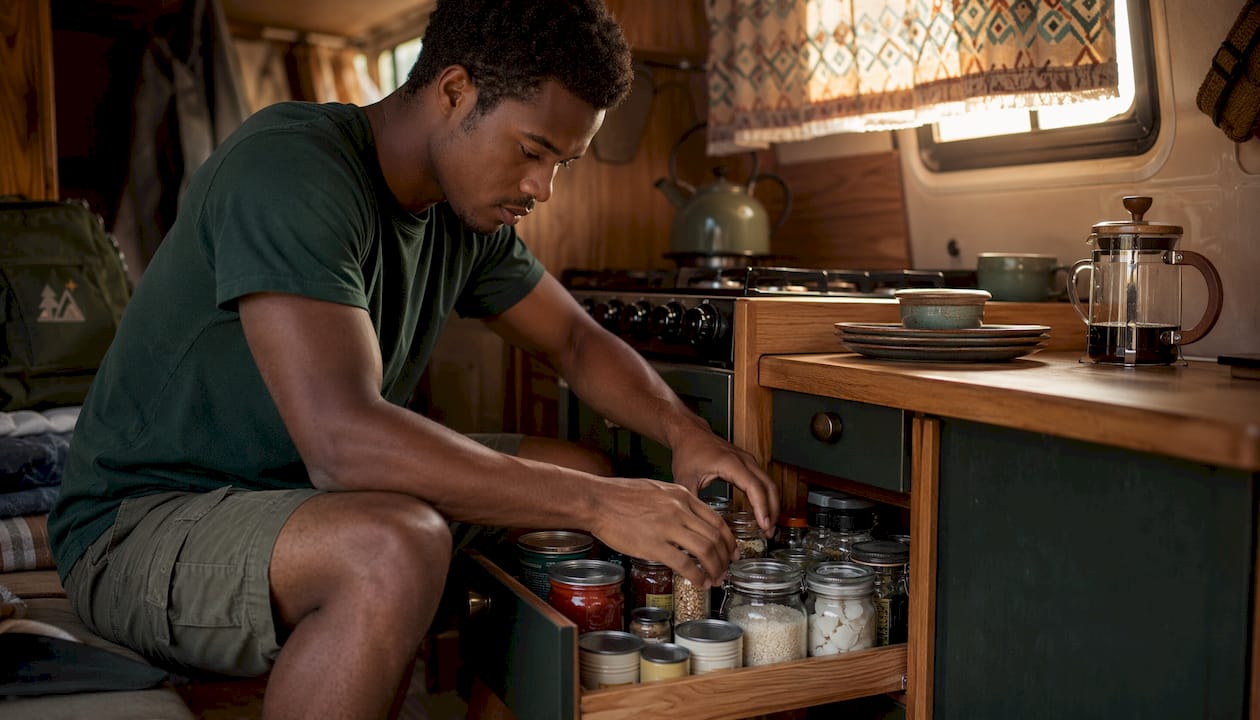
The kitchen is where first-timers most often overpack. Pack a functional kit built around multi-use cookware, not a replica of your home kitchen.
Must-have kitchen items:
- One nesting pot and one nesting skillet (stainless or cast iron)
- A sharp chef's knife and a small cutting board
- Plates, bowls, and utensils for your crew (melamine or stainless)
- Coffee setup you'll actually use every morning
- Food storage containers that stack flat
- Dish soap, sponge, and a small drying rack
- Trash bags and paper towels
Nice-to-have (only if you have the space):
- Small slow cooker or Instant Pot
- Collapsible colander and mixing bowls
- Outdoor griddle or camp stove
For the pantry, plan around versatile staples: rice, pasta, canned beans, canned tomatoes, olive oil, and a small spice kit. One-pot meals reduce cleanup and fit the limited counter space. Use stackable containers that fit your fridge shelf dimensions before you leave home.
Pro Tip: A cast-iron skillet or Dutch oven covers frying, baking, and braising in one piece of cookware. It replaces three single-use appliances and earns every ounce of its weight.
Bedroom and bathroom: linens, toiletries, and space-saving hacks
RV mattresses often run short-queen or custom sizes. Measure yours before buying sheets. Standard queen sheets will bunch and slip on a short-queen mattress, which gets old fast.
Bedding checklist:
- RV-specific fitted sheets (measure the mattress first)
- Lightweight blanket or quilt, plus one heavier layer for cold nights
- Two pillows per person
- A mattress topper if the factory mattress is thin
- Laundry bag
Bathroom checklist:
- RV-safe toilet paper (dissolves quickly to prevent black-tank clogs)
- Black-tank treatment tablets or liquid
- Quick-dry microfiber towels (one per person, plus one spare)
- Shampoo, conditioner, and body wash in travel-size or refillable bottles
- Toothbrush, toothpaste, floss
- Personal hygiene kit: deodorant, lip balm, razor, nail clippers
- Hanging shower caddy or over-door organizer
Vacuum storage bags compress linens to roughly half their volume. A hanging organizer on the back of the bathroom door handles toiletries without cluttering the counter. Keep the bathroom well-ventilated after showers to prevent moisture buildup in the small space.
Clothing and laundry: pack by activity and weather
The 5-4-3-2-1 rule works well for a week-long trip: 5 pairs of socks and underwear, 4 tops, 3 bottoms, 2 pairs of shoes, 1 jacket. Adjust the numbers for trip length, but keep the ratio.
- Base layers and everyday tops — quick-dry fabrics only; cotton stays wet too long in a small space.
- One nicer outfit — for a restaurant stop or a town visit.
- Activity-specific gear — hiking pants, swimsuit, or rain jacket based on your itinerary.
- Footwear — one pair of sturdy walking shoes, one pair of sandals or camp shoes.
- Sleep clothes — lightweight and packable.
Laundry plan:
- Packing cubes keep clean and dirty clothes separated in the same drawer.
- A small mesh laundry bag collects dirty items until you reach a campground laundry room.
- Pack a travel-size detergent pod pouch and a roll of quarters.
Pro Tip: Lay out every clothing item before packing, then remove one-third of it. You'll wear far less variety than you expect, and the closet space you free up is worth more than the extra outfit.
RV maintenance and safety checklist (on-site and en route)
Always confirm water, sewer, power, tire, and propane readiness before departure. These aren't optional checks.
Pre-departure vehicle checks:
- Tire pressure on all tires (including the spare) at cold inflation
- Exterior lights: headlights, brake lights, turn signals, running lights
- Fluid levels: engine oil, coolant, brake fluid, windshield washer
- Hitch security and safety chains (for towable rigs)
- Awnings retracted and locked
- Slide-outs fully retracted
Campground hookup checks:
- Potable water hose connected with pressure regulator inline
- Surge protector plugged in before shore power connection
- Sewer hose seated and supported off the ground
Safety items to pack:
- Fire extinguisher (ABC-rated, checked annually)
- CO and propane detector (test before each trip)
- First aid kit with bandages, antiseptic, pain relievers, and any personal meds
- Wheel chocks front and rear
- Portable jump starter pack
- Reflective triangles or road flares
Weight warning: Every RV has a Gross Vehicle Weight Rating (GVWR) and a Cargo Carrying Capacity. Overloading risks tire and suspension damage. Weigh your fully loaded rig at a truck-stop scale before your first long trip. If you're over GVWR, remove items until you're within the rating.
Tools and repair spares to bring on the road
A compact, organized toolkit handles the vast majority of roadside and campsite fixes without filling an entire bay.
Core toolkit:
- Multi-bit screwdriver (flathead and Phillips in one handle)
- Adjustable wrench and needle-nose pliers
- Portable jump starter pack
- Tire pressure gauge (digital is more accurate)
- Spare fuses (check your rig's fuse box for sizes)
- Duct tape and electrical tape
- Zip ties (assorted sizes)
- Hose clamps and spare hose fittings
- Utility knife
- Work gloves
- Headlamp with fresh batteries
Spare consumables:
- Valve stem caps (a few extras)
- Spare light bulbs for exterior fixtures
- Extra propane connector O-rings
Pro Tip: Store all tools in one clearly labeled bin in an exterior compartment. Write a simple index card listing what's inside and tape it to the bin lid. When something breaks at 9 PM, you'll know exactly where to reach.
Campsite setup and outdoor gear checklist
Arrive at your site and work through setup in this order: level the rig, chock the wheels, connect hookups, then set up outdoor living. Rushing hookups leads to leaks and electrical issues.
Hookup and setup essentials:
- Potable water hose (white or blue, never green garden hose)
- Water pressure regulator
- Sewer hose with elbow fitting and support cradle
- Electrical surge protector
- Shore power adapters (30-amp and 50-amp)
- Leveling blocks
- Wheel chocks
Outdoor living gear:
- Outdoor mat or rug (keeps dirt out of the rig)
- Folding chairs (one per person, plus one extra for a guest)
- Folding camp table
- Portable grill or camp stove with fuel
- Lantern or string lights
- Bug spray and citronella candles
- Firewood or fire starters (check campground rules on outside wood)
- Sunscreen
Keep outdoor gear in one exterior bay or a dedicated cargo bag so setup takes minutes, not a full unpack.
Electronics, documentation, and navigation
Pack a dedicated document folder and a separate tech kit. Mixing them leads to dead chargers and missing paperwork at the worst moments.
Documentation folder (keep in the cab):
- Driver's license
- Vehicle registration and title copy
- RV insurance card
- Roadside assistance membership card
- Campground reservation confirmations
- Emergency contact list
- Owner's manuals for the rig and appliances
Tech kit:
- Phone chargers and a 12V car adapter
- Portable power bank (20,000 mAh or larger for boondocking)
- Laptop or tablet with offline maps downloaded (Google Maps, Gaia GPS, or similar)
- Backup GPS device
- Bluetooth speaker
- Extension cord and power strip for inside the rig
- Coaxial cable if you use campground TV hookups
Security tip: Photograph every document and store the images in a cloud folder before you leave. A physical folder plus a cloud backup means a lost wallet doesn't strand you.
Packing for kids and pets
Families should prioritize entertainment and extra food storage; solo travelers focus on safety and simplified setup. For mixed groups, layer the lists.
Kids checklist:
- ID bracelets with a parent's phone number
- Entertainment stash: books, card games, small toys, and screen-free activity ideas for long driving days
- Child-specific medications and a small travel first aid kit
- Snacks in a dedicated, easy-access bag
- Portable potty for younger kids (campground bathrooms aren't always close)
- Extra changes of clothes (kids always need more than you think)
Pets checklist:
- Collar with updated ID tags and a leash
- Food portioned into daily servings in a sealed container
- Food and water bowls (collapsible saves space)
- Familiar bed or blanket
- Waste bags
- Vet records and vaccination proof (required at some campgrounds)
- Any medications or flea/tick prevention
Check whether your planned campground allows pets and whether there's a designated pet area before you arrive.
Space-saving packing tips and common mistakes
Favor multi-use items, nest your cookware, and leave single-use appliances at home. That one rule eliminates most overpacking.
Proven tips:
- Laminate your master checklist and use a dry-erase marker so it's reusable on every trip
- Use RV-safe toilet paper exclusively to protect your black tank
- Choose quick-dry microfiber towels over cotton bath towels
- Nest pots and pans inside each other with a paper towel between them to prevent scratching
- Use packing cubes for clothes and vacuum bags for bulky linens
- Weigh your loaded rig at a truck-stop scale to confirm you're within GVWR
Common mistakes to avoid:
- Overpacking the kitchen with single-use gadgets (toaster, egg cooker, blender) that rarely get used
- Ignoring weight limits until a tire blows
- Storing the sewer hose near the fresh water hose (keep them in separate, labeled bins)
- Skipping the pre-departure checklist because "you'll remember"
Pro Tip: After each trip, walk through the rig and note what you never touched. Remove those items before the next trip. After two or three trips, your list shrinks to exactly what you actually use.
Adjust the list for campground amenities
Match your checklist to the campsite tier. A full-hookup site at a KOA requires different gear than a primitive dispersed site in a national forest.
| Campsite tier | Items you can skip | Items you must pack |
|---|---|---|
| Full hookup (water, sewer, electric) | Water tank fill supplies, generator, extra water storage | Surge protector, pressure regulator, sewer hose |
| Electric and water only | Sewer hose, black-tank chemicals (short trips) | Fresh water hose, pressure regulator, portable waste tank |
| Primitive / boondocking | Shore power adapters, sewer hose | Generator or solar, large fresh water tank, portable waste tank, extra fuel |
Before you finalize your packing list, pull up the campground's amenity page. Campgazer's campsite detail pages list hookup types, potable water availability, sewer access, and electrical service for each site. Confirming those details takes two minutes and can save you from hauling gear you don't need or arriving without gear you do.
Pre-departure vehicle and safety checks
Run this sequence every time you pull out, whether you're leaving home or breaking camp.
- Disconnect shore power and stow the cord and surge protector.
- Stow the sewer hose in its dedicated bin; rinse and cap the fitting.
- Disconnect the water hose, drain it, and store it separately from sewer gear.
- Close all roof vents and windows.
- Retract the awning and confirm it's locked.
- Check all exterior lights (brake, turn, running) with a helper or a reflective surface.
- Check tire pressures on all tires, including the spare, at cold inflation.
- Confirm slides are fully retracted and locked.
- Walk the interior and secure loose items: dishes, appliances, anything that can shift.
- Confirm loaded weight is within GVWR before a long haul.
Key takeaways
A complete RV packing checklist, organized by category and laminated for reuse, is the single most effective tool for stress-free departures and consistent trip preparation.
| Point | Details |
|---|---|
| Pack hookups and safety first | Load water hose, pressure regulator, sewer kit, surge protector, and safety gear before anything else. |
| Laminate and reuse your checklist | A laminated master checklist with a dry-erase marker eliminates last-minute scrambles on every trip. |
| Match gear to campsite amenities | Check hookup types and services on Campgazer before packing to avoid hauling unnecessary gear. |
| Weigh your loaded rig | Confirm you're within GVWR at a truck-stop scale; overloading risks tires and suspension. |
| Campgazer | Use Campgazer's campsite detail pages to verify amenities and tailor your packing list before each trip. |
The packing list gets shorter with experience
Most first-timers pack as if they're moving into the rig permanently. That's understandable. An RV feels like a small house, and the instinct is to fill every cabinet. But the experienced RVers who've logged thousands of miles across the country tend to carry less, not more, because they've learned what they actually reach for.
The kitchen is usually the first place to cut. A cast-iron skillet, one nesting pot, a sharp knife, and a coffee setup handle nearly every meal you'll cook on the road. The slow cooker and the blender and the egg cooker stay home after trip two, because they took up a third of the cabinet and got used once. That's not a theory. It's what seasoned RVers consistently recommend.
The other shift that happens with experience is treating the RV as a self-sufficient unit rather than a hotel with wheels. That means knowing your water system, your electrical limits, and your weight rating before you leave the driveway. The campers who have the smoothest trips are the ones who've internalized those systems, not the ones with the most gear.
Try the master checklist on your next trip exactly as written. After you return, note what you never opened and what you wished you had. Two trips of that refinement and you'll have a list that's genuinely yours.
Campgazer helps you pack smarter before you leave
Knowing your campsite's amenities before you pack is the difference between a perfectly loaded rig and one stuffed with gear you'll never use. Campgazer gives you detailed amenity data for over 10,000 campgrounds across the country, including hookup types, potable water availability, sewer access, and electrical service, so you can tailor your checklist to the actual site, not a guess.
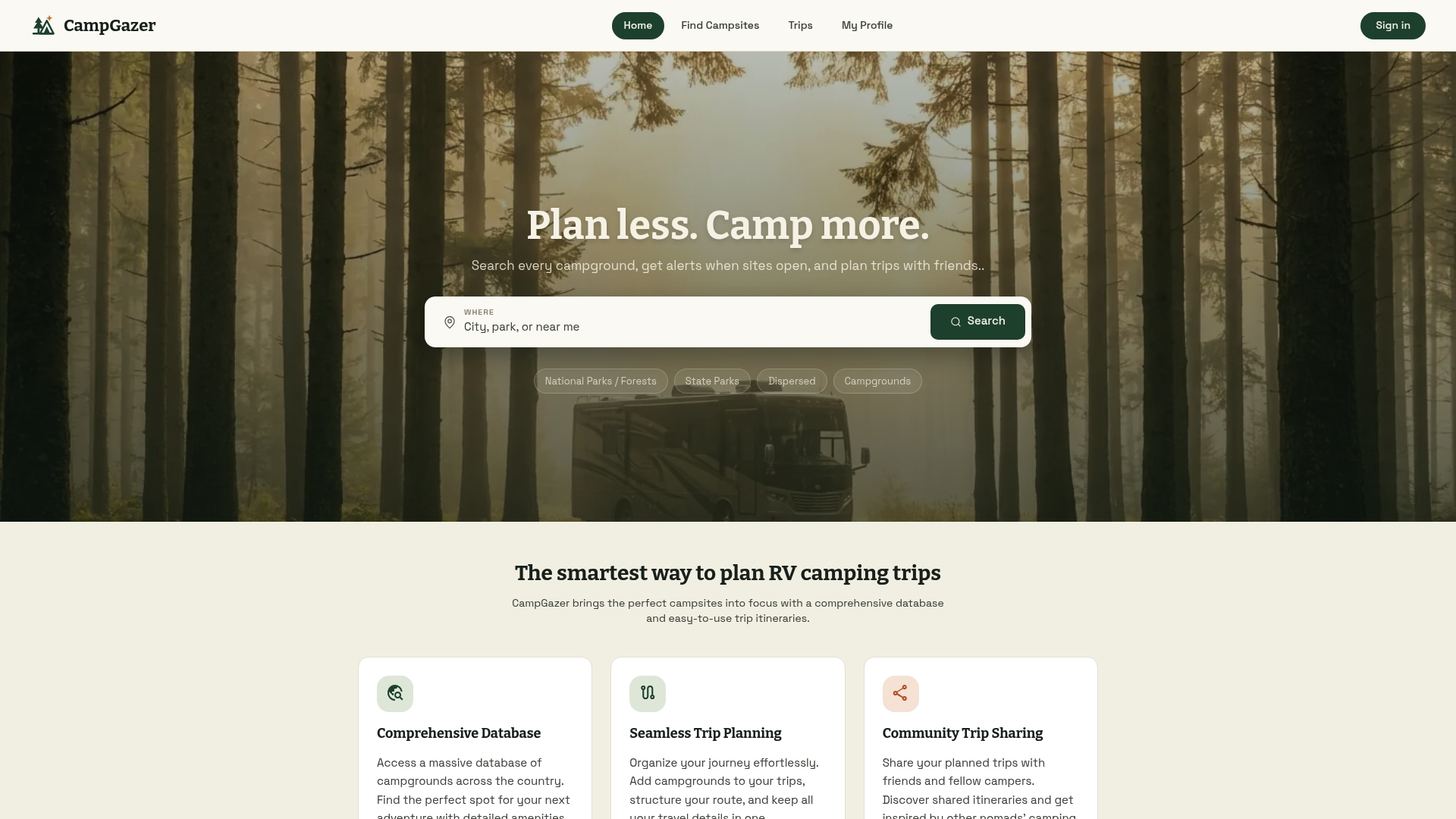
Pull up a KOA campground page on Campgazer before your next trip and check exactly what's at your site. Full hookups? You can leave the portable waste tank at home. Primitive site? You'll know to pack the generator and extra water storage before you're an hour down the road. The campsite data is there. Use it to pack only what you need, and spend the rest of your prep time looking forward to the trip. Start planning on Campgazer and let the amenity details do the work.
Useful sources and further reading
- RV Packing Checklist for First-Timers — Best source for kitchen overpacking advice and GVWR/weight guidance. Read this before your first trip.
- What to Pack for Your First RV Trip — Covers self-sufficiency mindset, commonly forgotten items, and hookup essentials. Strong on pre-departure organization.
- Ultimate RV Packing List and Checklist — Detailed category checklists and the laminate-and-dry-erase recommendation. Good for printable template inspiration.
- RV Packing List: Essentials for Every Adventure — Covers RV-safe toilet paper, microfiber towels, and pantry planning for one-pot cooking.
- Ultimate RV Packing List: Families, Couples, and Solo Travelers — Traveler-type tailoring for families, couples, and solo RVers. Useful for the kids and pets section.
- Good Sam RV Trip Checklist — Road-tested departure checklist and maintenance system overview from a widely used RV resource.