
Pilot Travel Center, Flying J Travel Center, and Love’s Travel Stop are the three chains that consistently deliver for RV travelers across the country. Each operates dedicated RV fueling lanes with high clearance and pull-through access, so you’re not wrestling a 40-foot rig into a space built for sedans. Beyond fuel, these stops offer propane refills, dump stations, overnight parking, and loyalty app discounts that add up fast on a long trip.
Top RV fuel stops at a glance:
-
Pilot Travel Center — Nationwide coverage, spacious RV lanes, propane, dump stations, myPilot app discounts
-
Flying J Travel Center — Key highway locations (Lodi CA, Kansas City MO, Tooele UT), dedicated truck-scale infrastructure
-
Love’s Travel Stop — More RV amenities than any other national travel stop network, full hookups at over 100 locations, Love’s Connect App savings
Which RV fuel stops are best for your rig?
Three chains dominate the conversation, and for good reason. Each brings something distinct to the table.
| Chain | RV-Friendly Lanes | Key Amenities | Best For | Rating |
|---|---|---|---|---|
| Flying J Travel Center | Dedicated spacious lanes, high clearance | Propane, dump stations, overnight parking | Reliable highway coverage on major corridors | 4★ |
| Pilot Travel Center | Wide pull-through lanes for large rigs | Propane, dump stations, myPilot app | Long-distance travelers needing consistent service | 4★ |
| Love’s Travel Stop | Wide turning lanes, pull-through pumps | Propane, dump stations, full hookups at 100+ sites | Amenity-focused travelers wanting app-based savings | 3.5★ (666 reviews) |
Pilot Flying J operates over 700 travel centers nationwide, making it the most geographically consistent option for cross-country routes. Flying J locations like the one in Lodi, CA and Tooele, UT sit directly on key interstate corridors, so you’re rarely hunting for a detour. Love’s stands out for sheer amenity depth: propane, dump stations, and the Love’s Connect App, which saves 10¢ or more per gallon on gas and diesel. Pilot’s myPilot app offers a 10¢ per gallon discount as well, and the RV Plus charge card stacks additional savings for Good Sam Club members.
How to choose the right fuel stop for your RV trip
Rig size is the first filter. Class A motorhomes and fifth-wheel trailers need high canopy clearance and wide lanes. A stop that works fine for a Class B van can trap a 40-footer in a tight turn.
What to check before you pull in:
-
Canopy height and lane width (truck stops built for 18-wheelers are your safest bet)
-
Pull-through pump availability so you never have to back up
-
Propane refill and dump station access if you need them
-
Overnight parking, especially for multi-day routes
Pro Tip: Standard map apps don’t account for RV length or roof clearance. Use satellite view to visually inspect a station’s layout before you arrive — it takes two minutes and can save you from a very expensive mistake.
Experienced RV travelers refuel before the quarter-tank mark rather than waiting until they’re running low. In mountainous or remote terrain, the gap between suitable stops can stretch well beyond what you’d expect on a flat interstate. Diesel RV owners get an extra edge from trucker-focused apps like TSD Open Roads or Mudflap, which save $0.30–$0.40 per gallon and route you directly to large-format truck lanes that double as RV-friendly fueling spots.
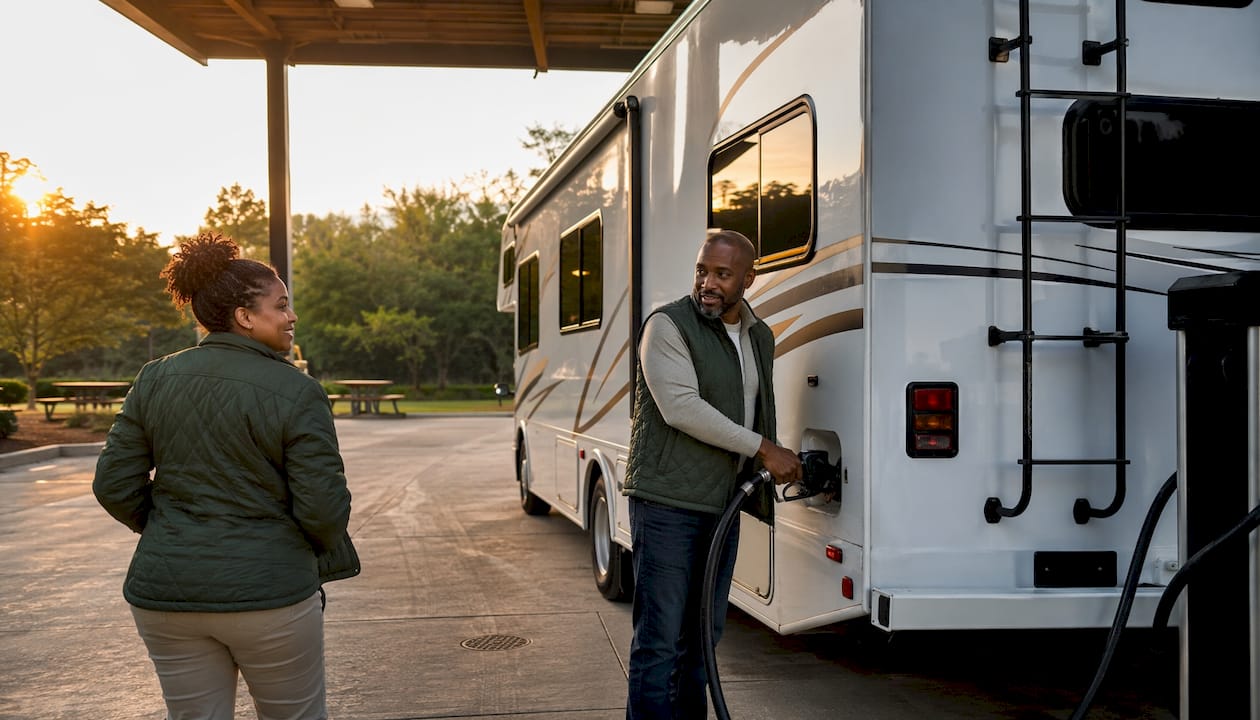
Why truck-stop style stations work better for RVs
Standard gas stations were built around passenger cars. The pump islands are close together, the canopies are low, and the exit paths assume you can turn on a dime. Truck stops solve all three problems by design.
The infrastructure at chains like Pilot Flying J and Love’s is sized for 18-wheelers, which means RVs fit without drama. Pull-through lanes eliminate backing maneuvers entirely. Canopies clear roof-mounted AC units and satellite dishes. The parking lots are large enough to unhitch a trailer if needed. Add clean restrooms, food options, and 24-hour operation, and a single stop handles everything without requiring a second detour.
Safety tips for fueling large RVs
Always use end pumps when available. They give you the most maneuvering room on at least one side, which matters when you’re 35 feet long and pulling a toad. If the station is busy, wait for an end position rather than squeezing into a middle lane.
Use your mirrors and, when possible, a spotter outside the rig. At unfamiliar stops, a co-pilot walking alongside can catch obstacles your mirrors miss. Stick to lanes marked for RVs or trucks, and never block the diesel lanes used by professional drivers. Fuel caps on motorhomes are sometimes on the driver’s side, sometimes the passenger side — confirm yours before you pull up to the pump so you don’t have to reposition.
Fueling in remote areas with limited facilities
Away from interstates, the major chains thin out fast. In rural stretches of Nevada, Montana, or the Texas Panhandle, you may go 80 miles between any station at all. Local knowledge fills the gap. Campground staff recommendations often surface independent truck stops and co-ops that don’t appear in standard apps but handle large rigs without issue.
Carry a jerry can rated for your fuel type as a backup on truly remote legs. Apps like GasBuddy and iExit help identify what’s ahead on the highway, but cross-reference with satellite view before committing to an unfamiliar stop.
How does fuel quality compare across major RV fuel stops?
Pilot Flying J, Love’s, and Flying J all source fuel from major regional suppliers and meet standard ASTM specifications. Diesel quality is generally consistent across these chains, which matters for modern diesel engines with tight fuel-system tolerances. Love’s offers DEF (diesel exhaust fluid) at many pumps, a practical detail for newer diesel motorhomes that require it.
Independent truck stops vary more. Some carry top-tier gasoline or premium diesel additives; others don’t. If fuel quality is a concern for your engine, stick to the major chains or check the station’s fuel supplier information posted at the pump.
Campgazer helps you plan the whole trip, not just the fuel stops
Planning fuel stops is one piece of a longer puzzle.
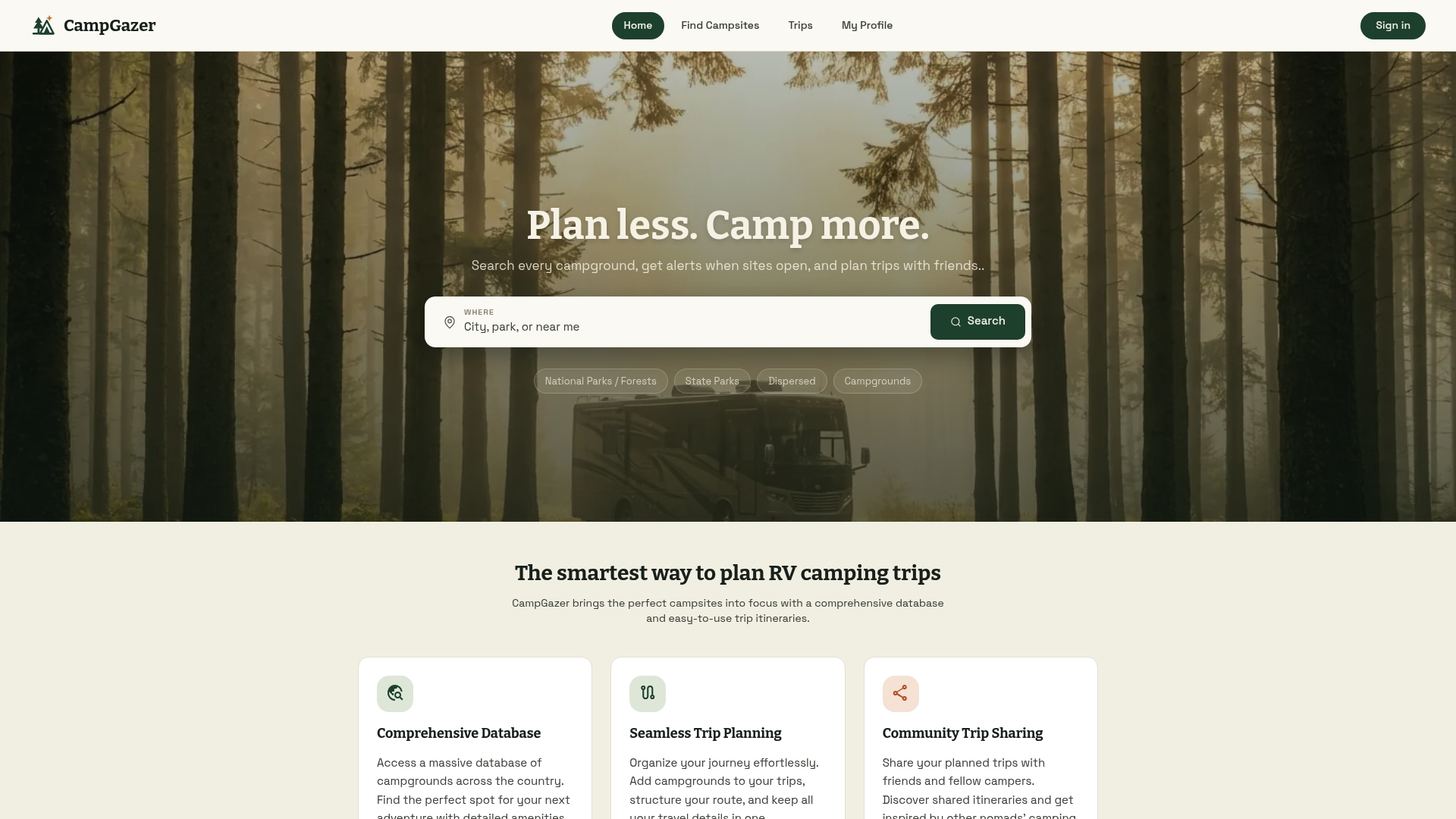
Campgazer gives RV travelers a searchable database of 10,000+ campgrounds across the US, each with detailed amenity listings, rig-spec filters, and live availability alerts. You can build a full itinerary around your fuel range, your rig’s dimensions, and the campgrounds you actually want to stay at — not just the ones that happen to be close to a highway exit. The community trip-sharing feature means you can see real routes from fellow RV travelers, including which fuel stops they used and why. Start planning your next trip on Campgazer and stop guessing at what’s ahead.
Key Takeaways
Pilot Flying J, Flying J, and Love’s are the most reliable RV fuel stops in the US, each offering dedicated lanes, propane, and dump stations along major highway corridors.
| Point | Details |
|---|---|
| Use major chains first | Pilot Flying J, Flying J, and Love’s offer consistent RV infrastructure nationwide. |
| Save with loyalty apps | Love’s Connect App saves 10¢/gal on gas; myPilot saves 10¢/gal; trucker-focused diesel apps like TSD Open Roads or Mudflap can help you save up to $0.40 per gallon and guide you to large truck stops with RV-friendly layouts. |
| Refuel at the quarter-tank mark | Waiting longer in remote or mountainous terrain risks being forced into an unsuitable stop. |
| Check layouts before arrival | Satellite view catches low canopies and tight turns that standard GPS apps miss entirely. |
| Campgazer for full-trip planning | Campgazer’s 10,000+ campground database lets you build itineraries around your rig specs and fuel range. |